 Pip Prep
Practise
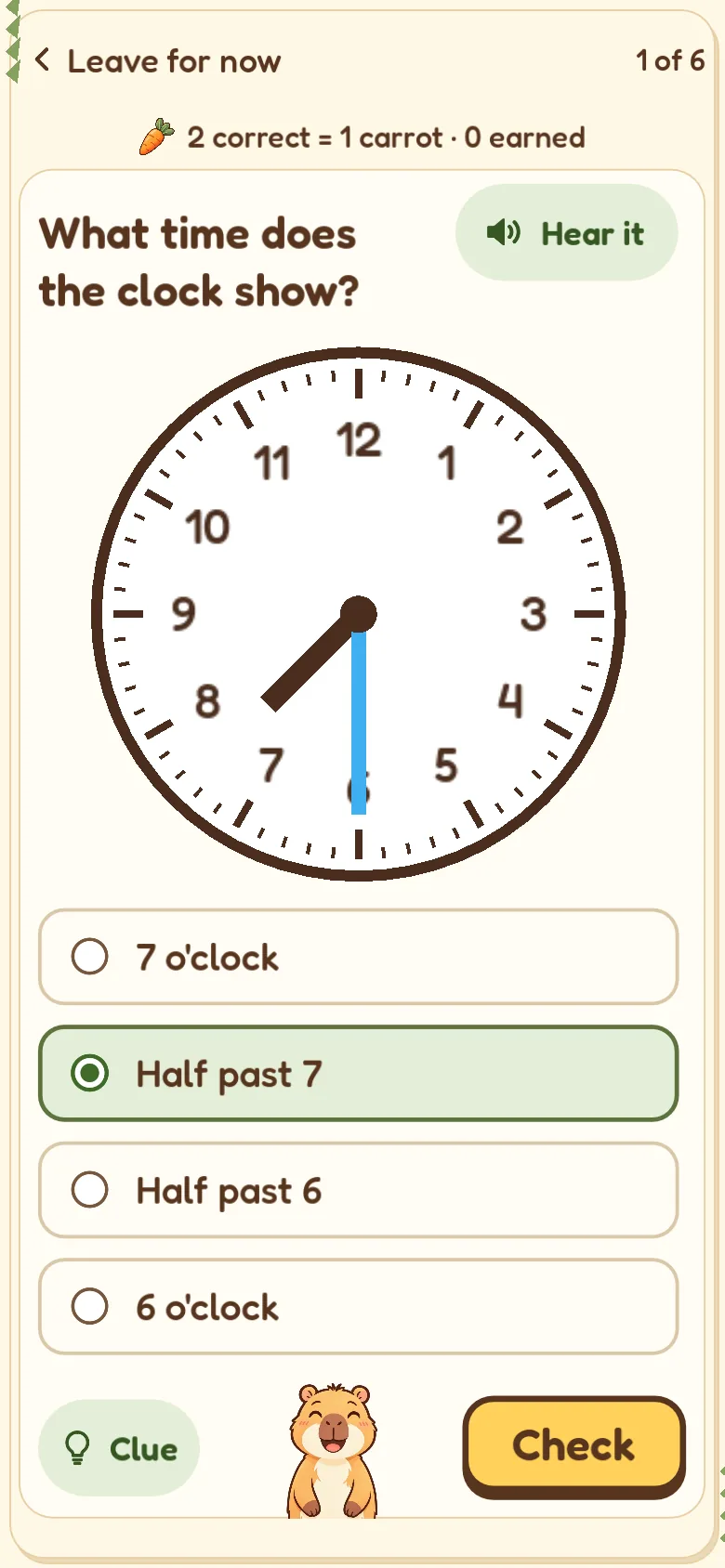
A round is ten questions. Tap Hear it and the question is read aloud; a clue is there if your child wants one.

NAPLAN-style practice · Years 2 and 3
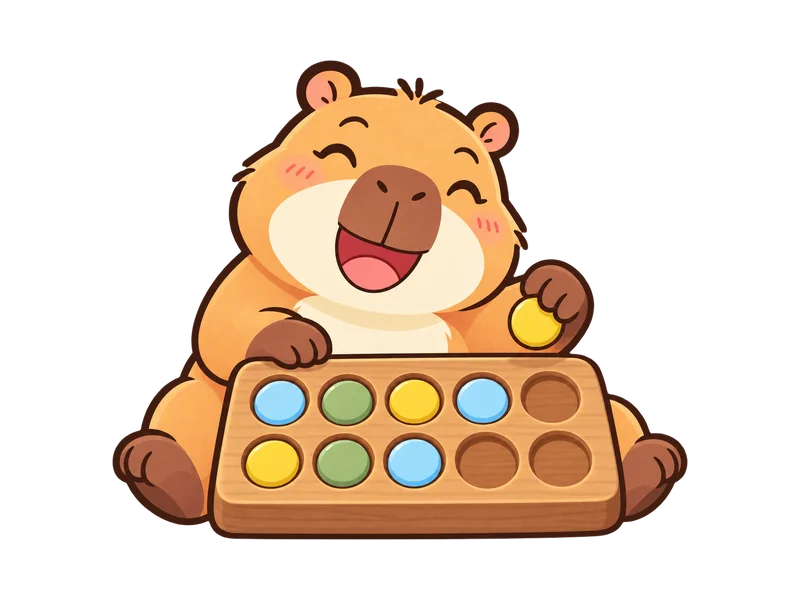
Short maths and English rounds for Years 2 and 3, and a capybara called Pip who grows as your child learns: right answers become treats, treats become games, and games help Pip grow. When your child gets stuck, Pip shows how on a clock, with coins or on a ten-frame.
No ads No AI chat No account to start 102 free questions
How it works
Tap Start Treats Quest for ten questions of maths and English, about seven minutes, then feed Pip and play. Ordinary practice has no timer, and the free questions can be repeated as often as your child likes.
A round is ten questions. Tap Hear it and the question is read aloud; a clue is there if your child wants one.
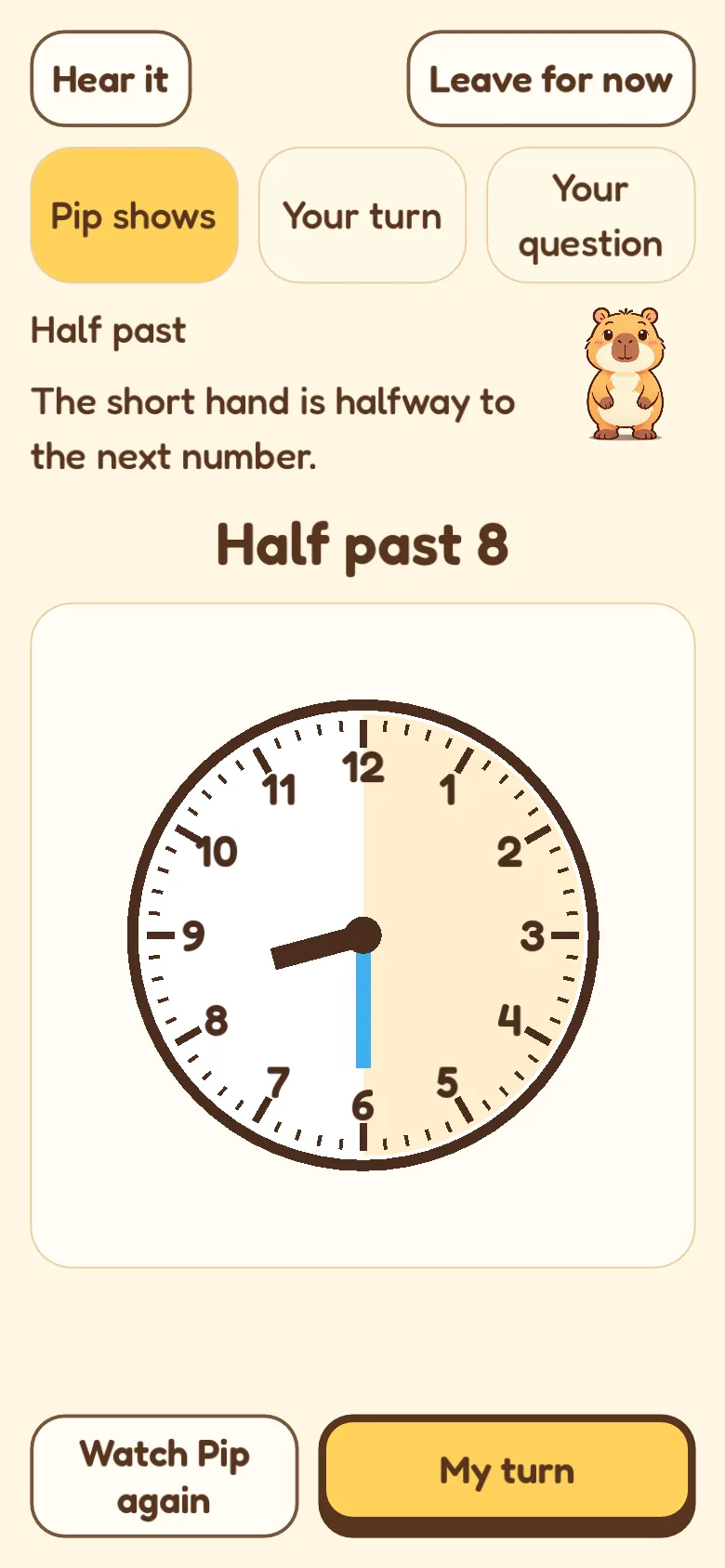
After a wrong answer, your child can have another go or let Pip show how. Then it's their turn again.

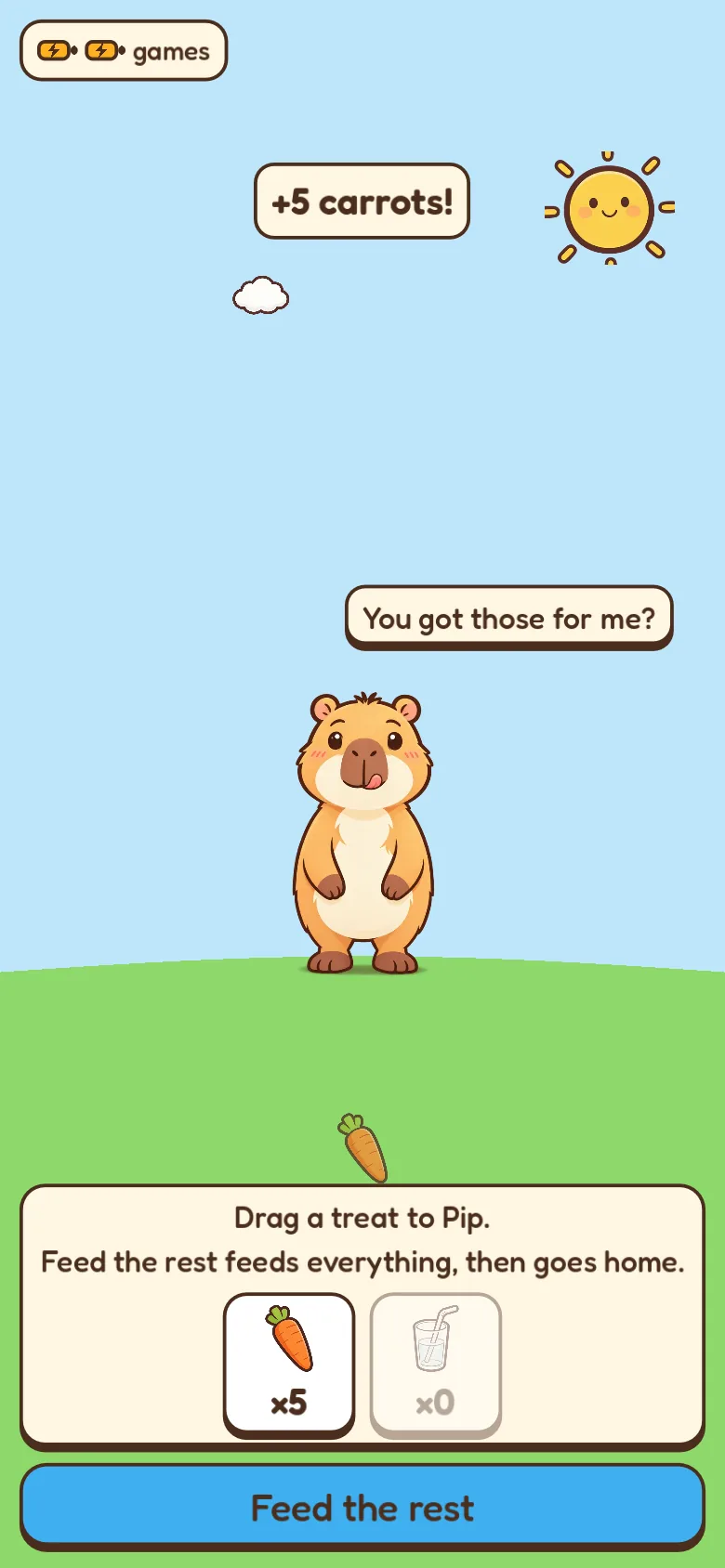
Right answers earn carrots and water. Drag them to Pip; every five treats fill up a game.




Seven short mini-games. Playing helps Pip grow through five stages, and Pip never shrinks during a break.

Practice earns treats, treats earn a game, and games help Pip grow. Answers given after Pip has shown how don't earn treats, so the treats always mean your child did it.
When they're stuck
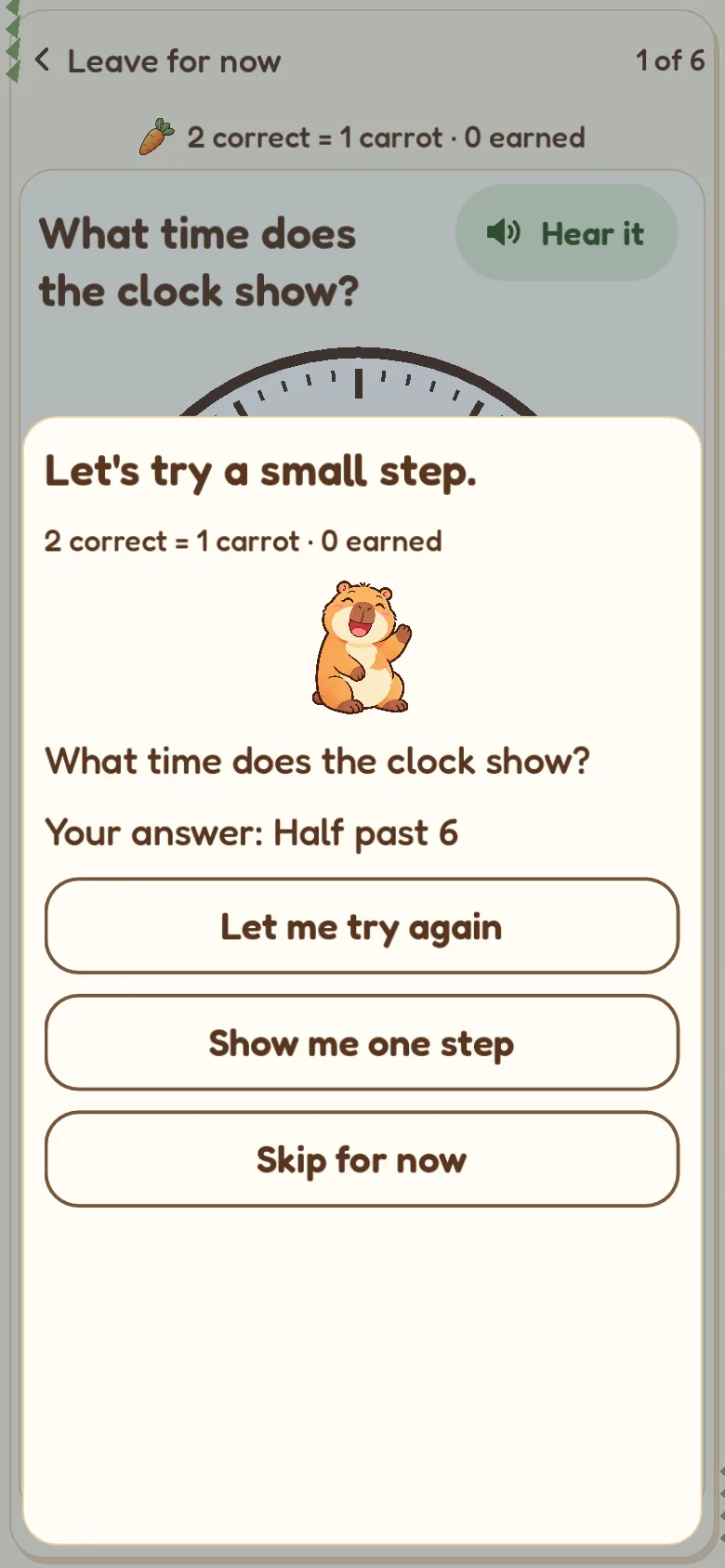
A wrong answer doesn't get a red cross. It gets a choice: “Let's try a small step.” Your child can try again, let Pip show one step, or skip for now. For many early maths and reading questions, Pip then teaches with a hands-on tool.
Any practice question or reading passage can be read aloud. The starter questions' audio is built into the Android app, so it works offline.
Answers after Pip's help don't earn treats and aren't counted as working alone. Clues count as half in the report.

A new pup. Maths and English practice earn treats for Pip.
Meet Pip
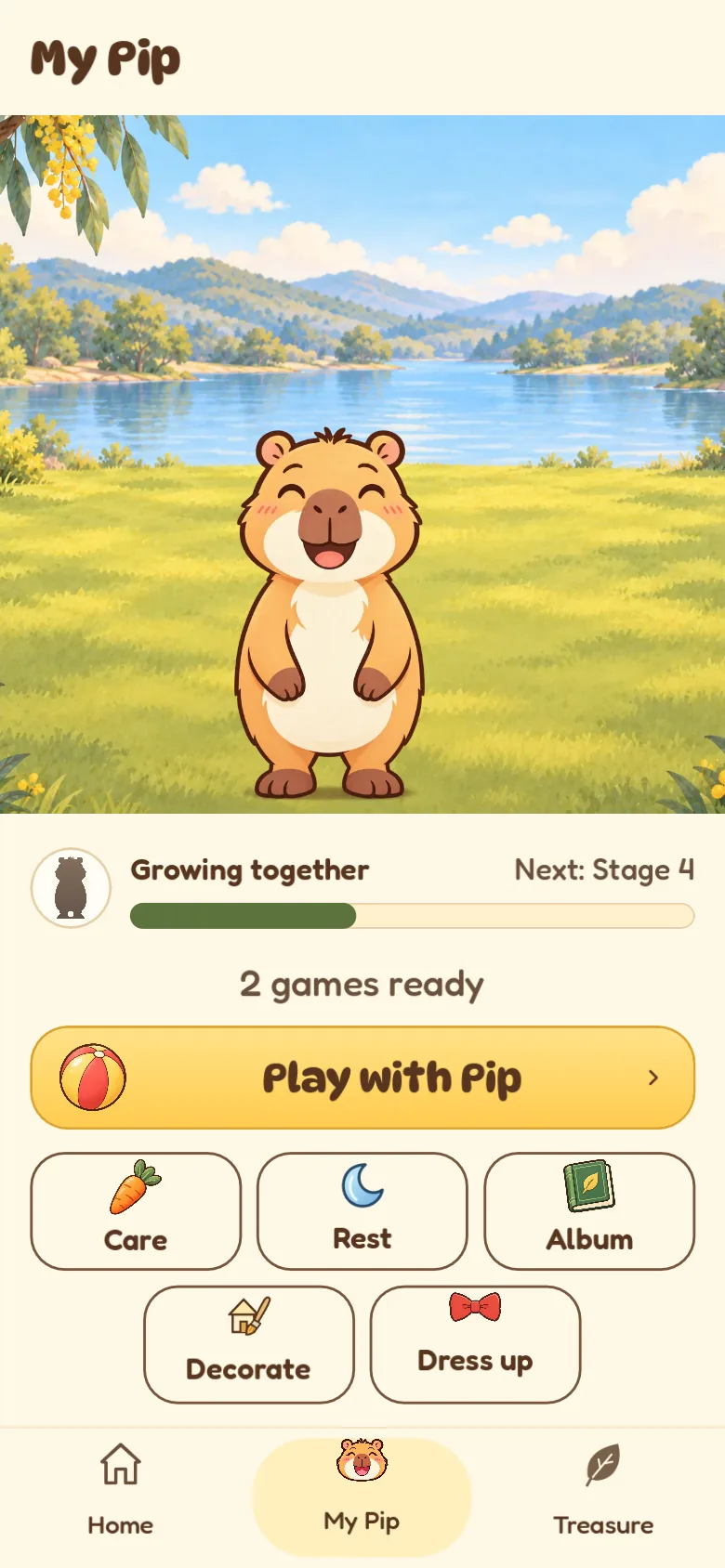
My Pip shows how Pip is growing, with Play with Pip, Care, Rest and Pip's little album of memories.



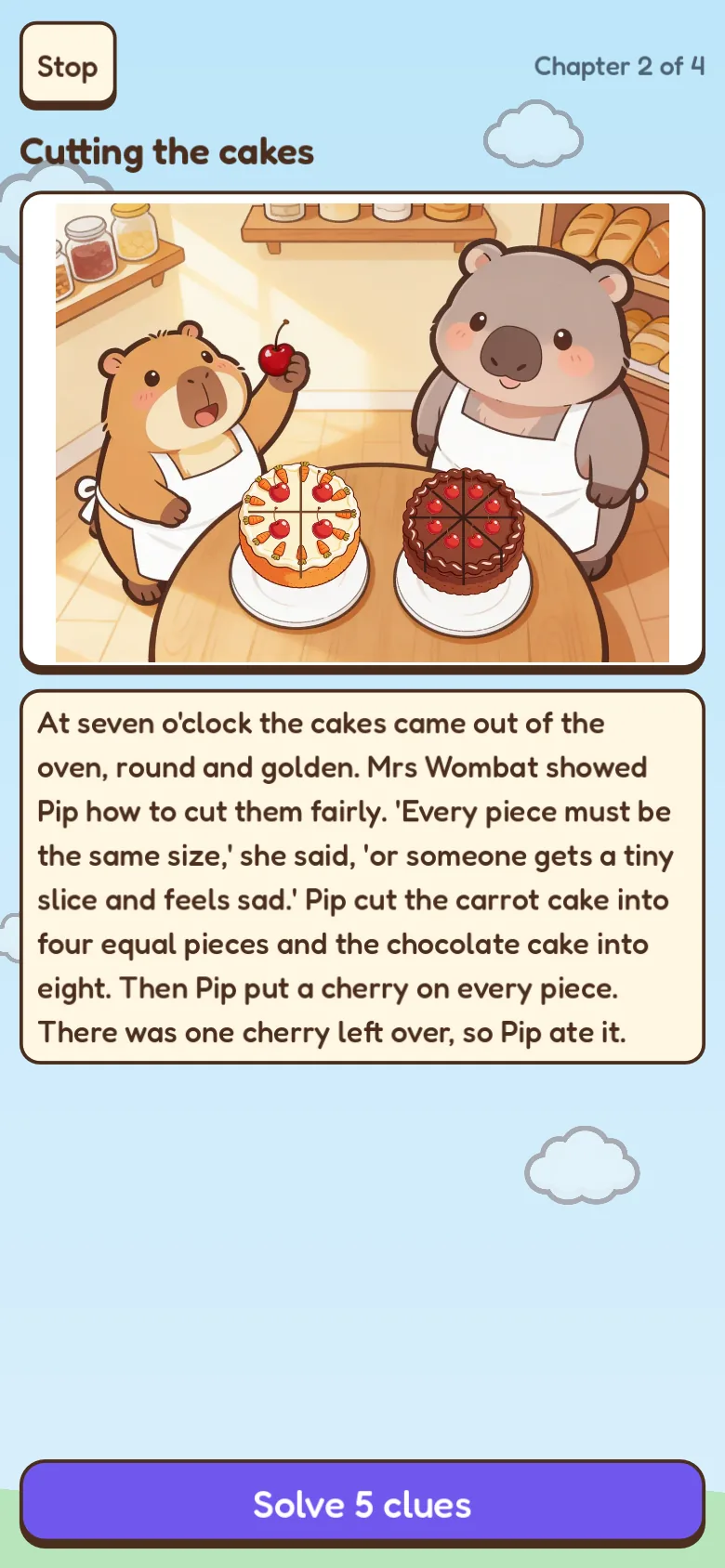
What's inside
45 skills for Years 2 and 3, organised by the Australian Curriculum (version 9) and NAPLAN domain, in seven question formats: multiple choice, tap the word, drag, type the number, spell the word you hear, choose all that apply and tap the picture.
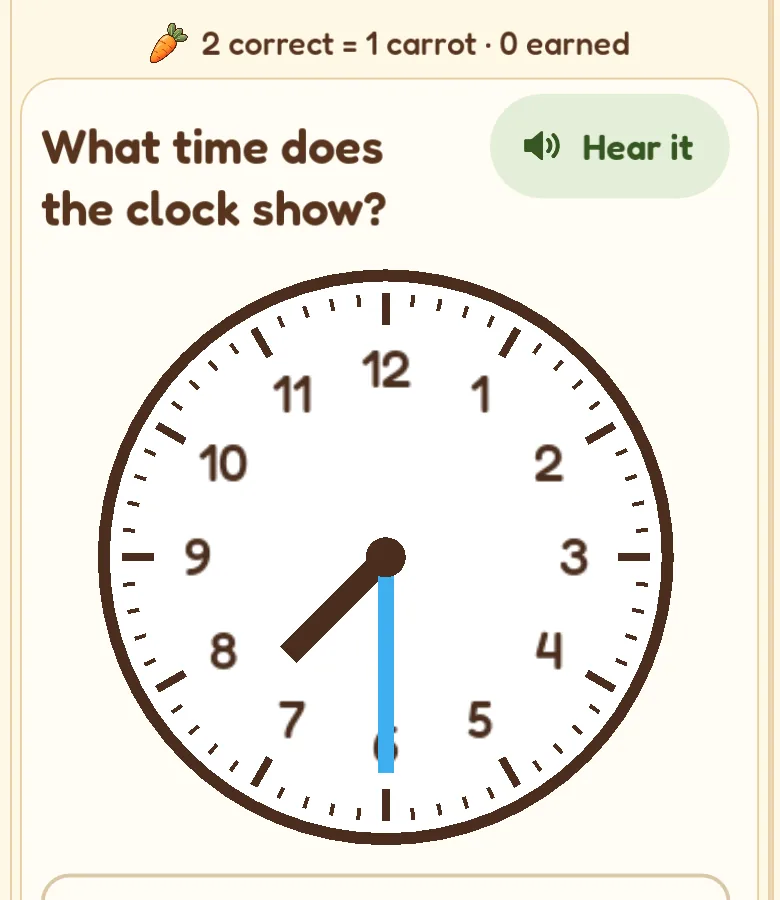
Number and algebra, measurement and space, statistics and probability, with two-step problems in the mix.
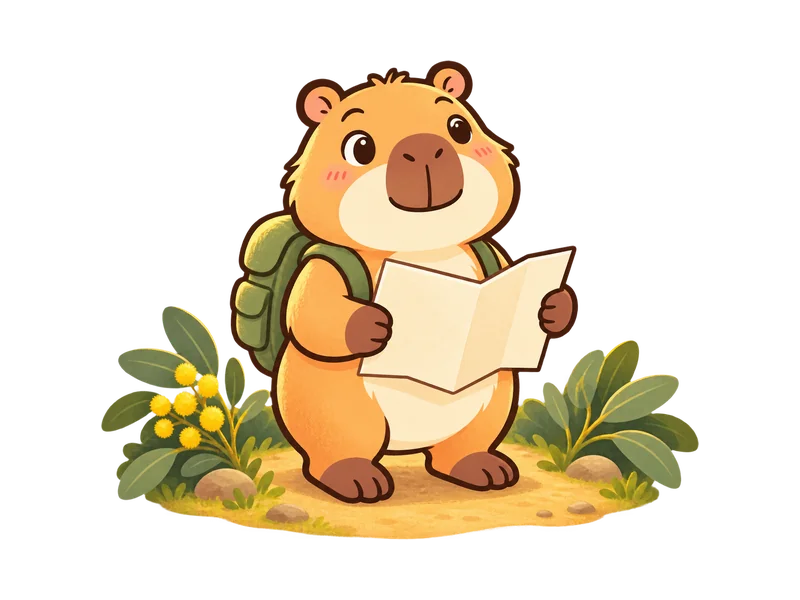
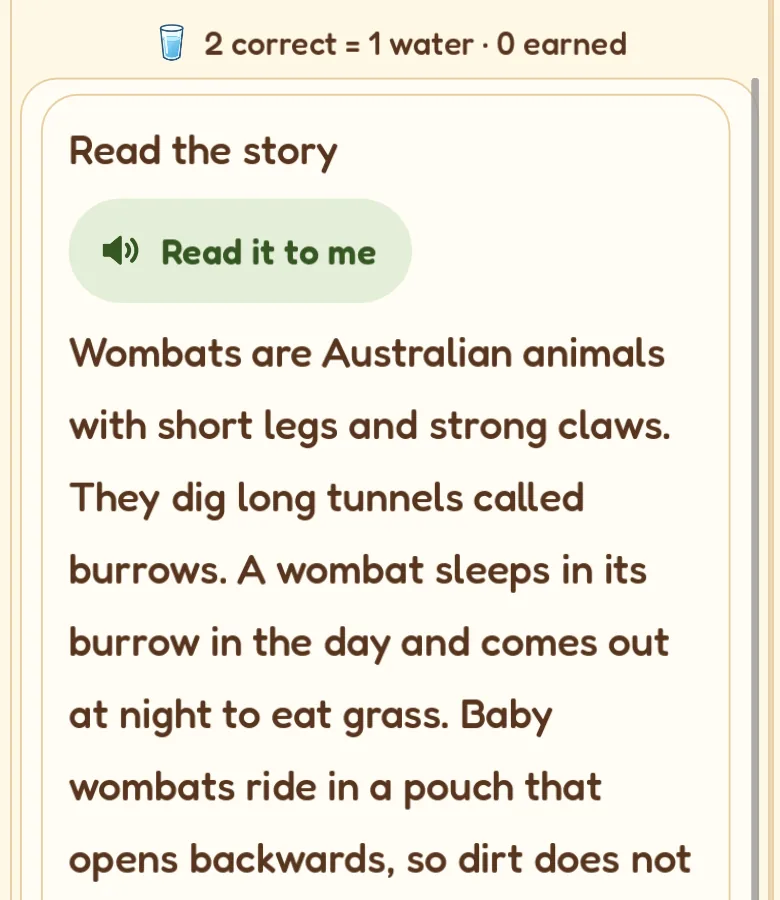
Short texts with find-the-detail, work-it-out and word-meaning questions, plus reading inside Pip's adventures.
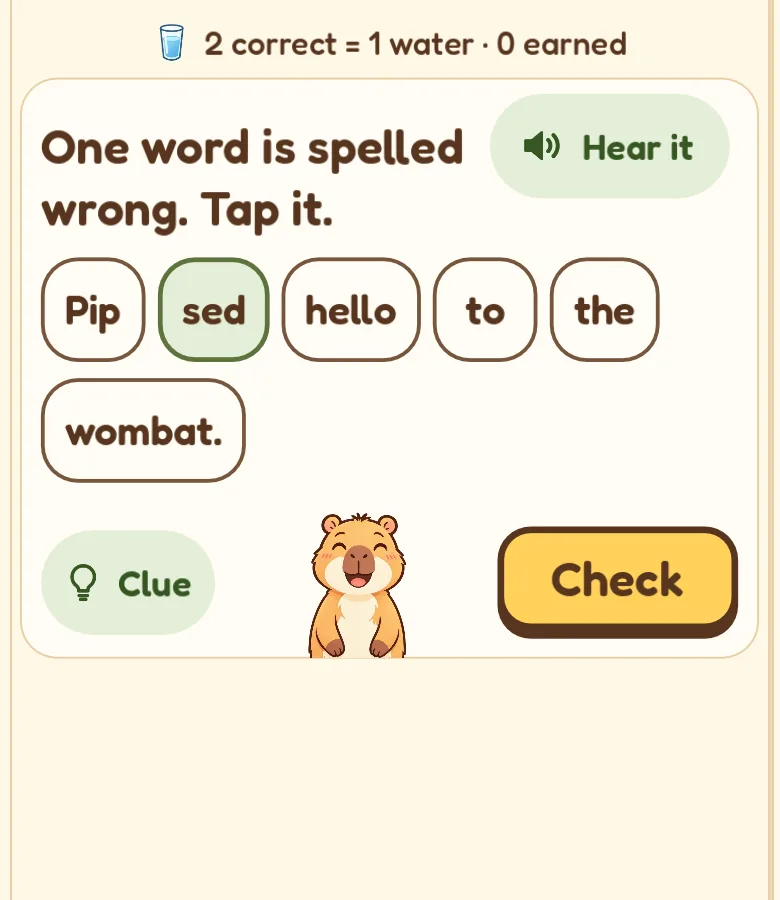
Spelling, grammar and punctuation, including tap-the-misspelt-word proofreading and spelling the word you hear.
Eight NAPLAN-style prompts and a 40-minute clock: plan, write and check on paper, then read it to a grown-up. Started from the grown-ups' page, free on both plans.
 Moonlight ArcheryCarrot Catch
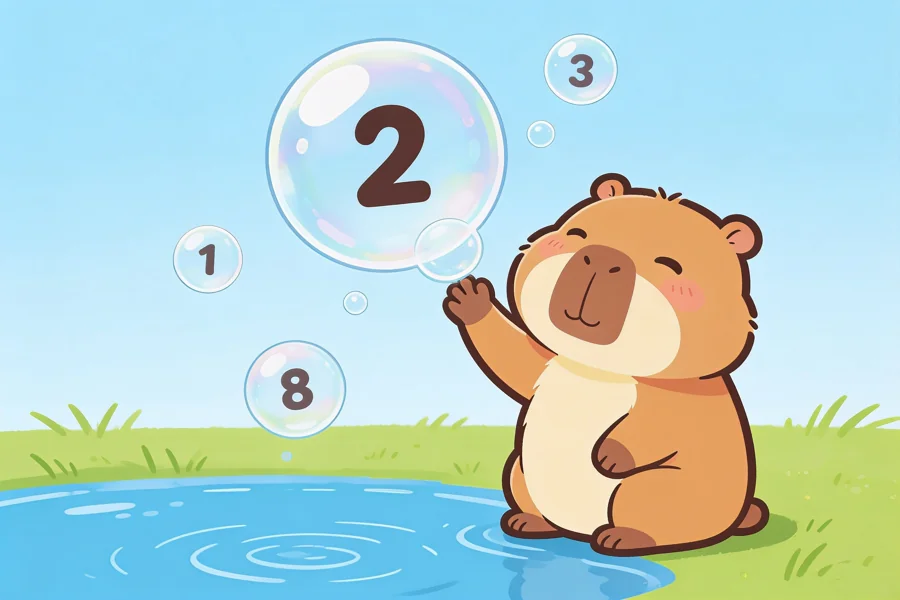 Bubble Pop
 Bath Time
 Creek Crossing
 Firefly Night
 Puddle Jump
Seven mini-games, about twelve seconds a round. One game costs five treats, so practice always comes first.
For parents
The grown-ups' page is behind a quick sum. It shows what happened this week, an estimate for each NAPLAN area, and “Not enough evidence yet” when there isn't enough practice to go on.
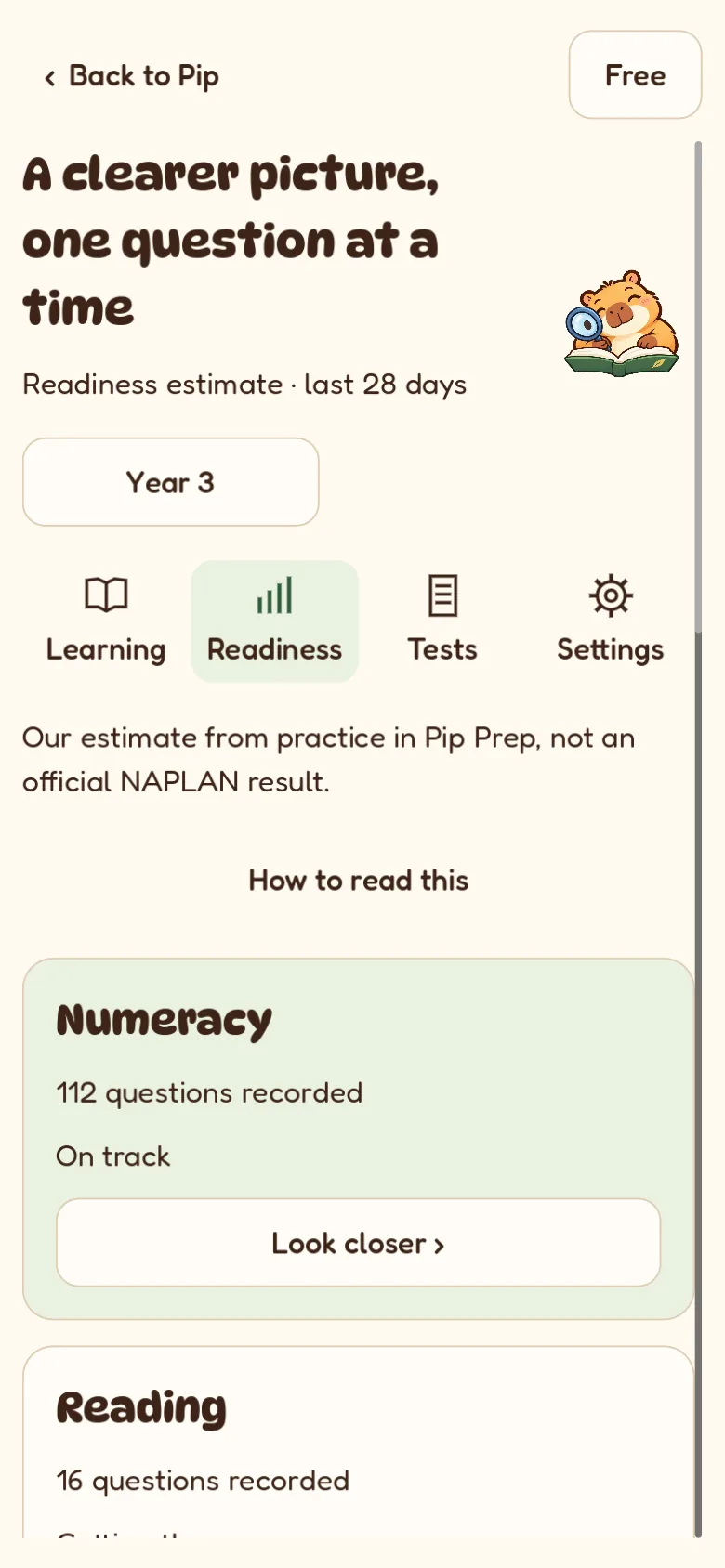
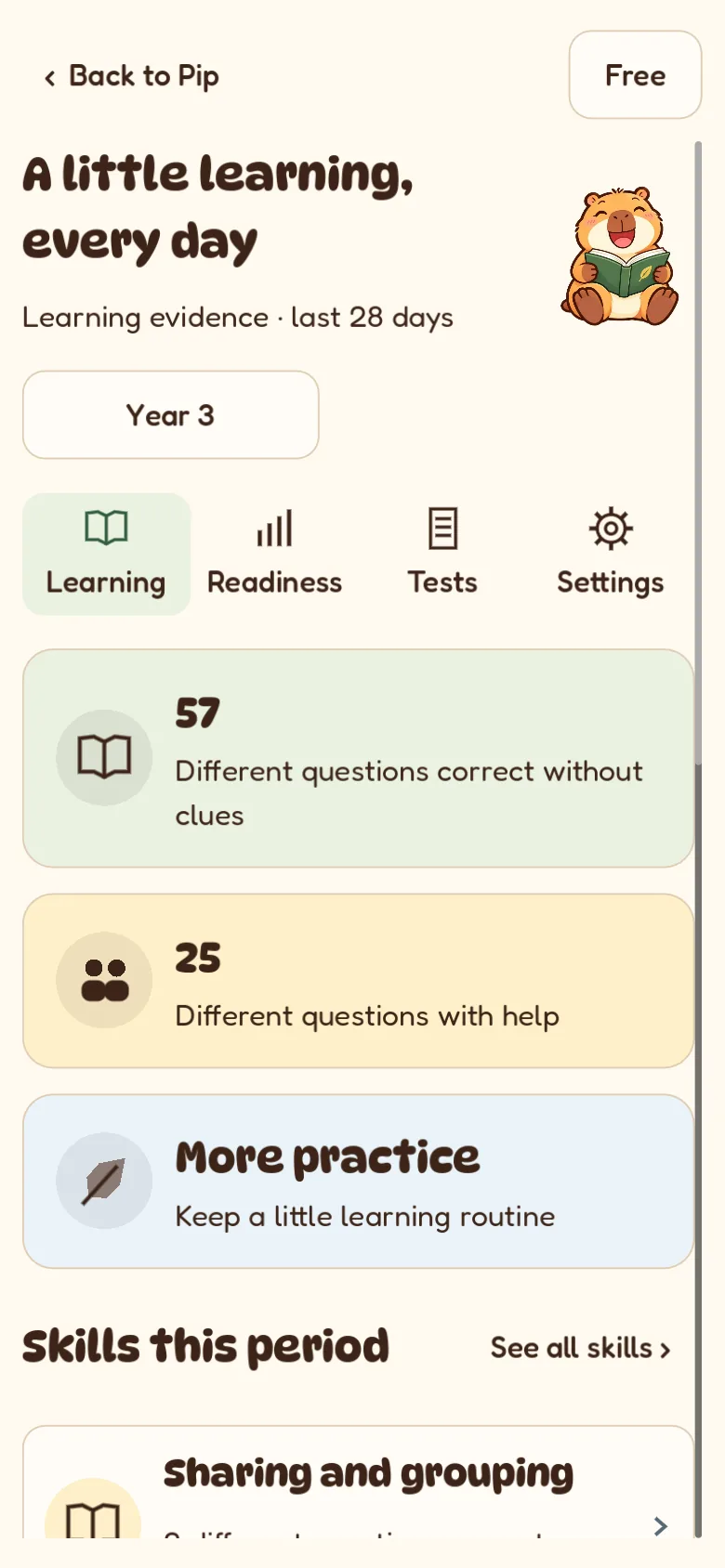
No chatbot and no AI marking. Questions, clues, explanations and Pip's voice clips are made in advance, and nothing your child types, says or writes is sent to an AI service.
A child profile is a nickname and a year level. A parent account is an email address and a six-digit sign-in code, with no password.
No ads and no advertising or analytics tools, in the app or on this site. Crash reports, with email addresses left out, help us fix bugs.
Free practice and reports work on the device without an account. A parent signs in for Family, cloud saves and pairing a learning device.
In the Android app, free practice and its question audio work without internet. Family keeps working offline for up to seven days.
Australian spelling, money, animals and places, written for the Australian Curriculum version 9 and the NAPLAN areas.
Free to start
Everything that helps your child learn is in the free plan. Family adds more questions, cloud saves and room for brothers and sisters.
No card or account to start. A child sees the starter questions for their year level; repeating them doesn't add new ones.
Monthly or yearly, through Google Play in Australia. New subscribers can start with a free trial.
Family is bought in the Android app with a Google Play subscription, which renews until you cancel it in Google Play. Google Play shows the price and any free trial before you subscribe. The web version can't take payment, but it can use an existing Family plan after a parent signs in.
Questions
The starter set of 102 questions (a child sees the ones for their year level), with no daily practice limit. Pip, the mini-games, the Treasure adventures, hands-on lessons, explainers, Hear it, the readiness report, practice tests from the starter questions and writing practice are all free. Repeating the starter set doesn't add new questions.
All 1,800+ questions, including harder stretch questions, cloud saves across devices and up to four children. It's a monthly or yearly Google Play subscription in Australia, and Google Play shows the price and any free trial before you subscribe. If you cancel in Google Play before a free trial ends, you won't be charged.
After a wrong answer your child can try again, let Pip show how, or skip. Pip teaches with a hands-on tool (a clock, coins, a ten-frame, a number line and more) or a step-by-step explainer, then your child answers the original question. Answers after Pip's help don't earn treats and aren't counted as working alone.
Years 2 and 3, or a mix of both. NAPLAN starts in Year 3, so Year 2 covers the groundwork (numbers to 100, first spelling patterns, simple stories) and Year 3 practises the Year 3 skills, with harder stretch questions in Family for children who are ready.
No. Pip Prep is independent and isn't affiliated with, endorsed by or authorised by ACARA, which runs NAPLAN. NAPLAN is a trademark of ACARA. Our questions are written for Pip Prep and aren't NAPLAN test questions. We use the NAPLAN area names to sort the skills, and the report is our own estimate from practice in the app; it doesn't predict a NAPLAN result.
No. There is no chatbot and no AI marking. Questions, clues, explanations and Pip's voice clips are made in advance and are the same for every child.
In the Android app, yes: the questions and the starter questions' audio are built in, so free practice works without internet. Family keeps working offline for up to seven days. Signing in, cloud saves and some question audio need a connection. The web version needs a connection.
No. Free practice runs in a browser on a phone, tablet or laptop at app.pipprep.com.au. The Android app adds Family subscriptions through Google Play and works offline.
A Treats Quest has ten questions, about seven minutes. Time varies with reading, help, feeding and games, so go at your child's pace. Practice tests have a 20-minute clock, and writing has its own 40 minutes.
A child profile is a nickname and a year level. A parent account is an email address and a six-digit sign-in code, with no password. Answers and progress are stored to build the report, on the device and, with Family, in a cloud save. There are no ads and no advertising or analytics tools. The privacy policy has the details.
Try it today
Open it on a phone, tablet or laptop. Pick a year level, answer ten questions, feed a capybara.